Skypoly Pergola Covers
Multiwall polycarbonate roofing panels that turn an open pergola into a covered patio. They keep the rain off, take the edge off the sun, and still let the daylight through.
Two Skypoly Pergola Roof Systems
Same Skypoly panels, two ways of joining them. Pick by your weather and how dry you need it underneath.
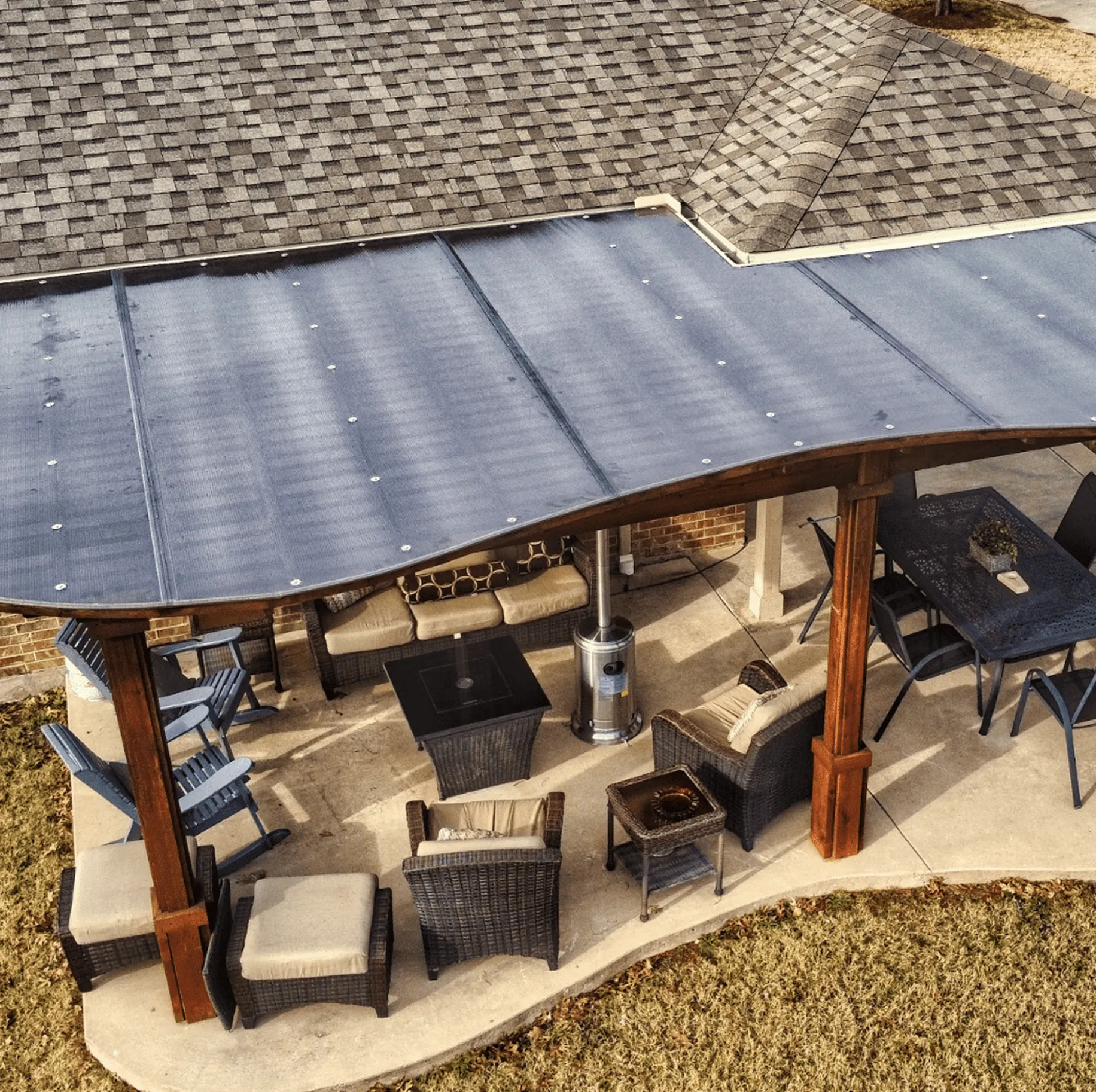
Skypoly Apollo Pergola Cover
8mm twinwall polycarbonate panels with a matching joining system. The budget-friendly way to add shade and rain cover to a pergola in a milder climate.
- Water resistant, not guaranteed leakproof
- Hail coverage up to 3/4 inch
- Minimum slope: 1 inch of drop per 24 inches
- Clear, Bronze, or Ice White
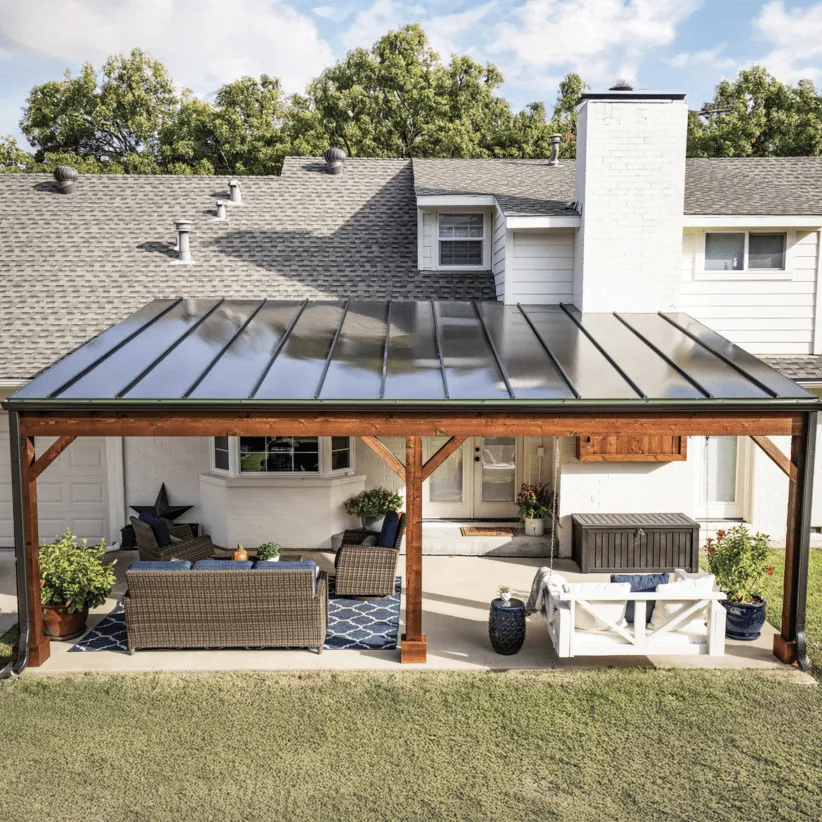
Skypoly Hercules Pergola Cover
Standing-seam panels that join without screws through the seams. Built for patios that see regular rain, strong wind, and seasonal snow.
- 10-year leakproof seam warranty
- Wind up to 125 mph, snow up to 40 psf, hail up to 3/4 inch
- Minimum slope: 1 inch of drop per 48 inches
- Clear, Bronze, or Ice White
Why Skypoly Panels Work on a Pergola
A middle ground between a fabric shade that wears out and a solid roof that darkens the house
Daylight Stays In
Unlike metal or shingles, the panels let light through. Rooms behind a covered patio don't go dark, which matters next to big windows and sliding doors.
Light on the Frame
About 0.31 lb per square foot. The panels for a 10 x 12 ft roof weigh roughly 37 lb before framing and hardware, far less than glass.
Built for Sun Exposure
UV-protected polycarbonate resists the yellowing and brittleness that ruin cheap plastic roofing, backed by a 10-year limited UV warranty.
Tough Against Impact
Polycarbonate shrugs off hits that would crack glass or acrylic. Both systems carry limited hail coverage for stones up to 3/4 inch.
Cooler Underneath
Air channels inside the 8mm sheet slow heat transfer (R-value 1.667). In good conditions the patio can feel up to 20°F cooler, depending on color and airflow.
Apollo vs. Hercules
If a few drips during a storm are fine, Apollo saves money. If the patio has to stay dry, or you get wind and snow, go with Hercules.
| Apollo | Hercules | |
|---|---|---|
| Best for | Shade and light rain in milder climates | Frequent rain, wind, and snow |
| Panel joints | Joining profiles | Standing seams |
| Leaks | Water resistant, not guaranteed leakproof | 10-year leakproof seam warranty |
| Hail warranty | Up to 3/4 inch | Up to 3/4 inch |
| Wind warranty | Not covered | Sheet damage up to 125 mph |
| Snow warranty | Not covered | Up to 40 lb per sq ft |
| Minimum slope | 1 in. per 24 in. (about 4%) | 1 in. per 48 in. (about 2%) |
| Cost | Lower | Higher |
Warranty figures are conditions of coverage, not structural ratings for your pergola. The frame still has to carry the roof and local loads.
Clear, Bronze, or Ice White
Color decides how bright it stays under the roof. Percentages are visible light that passes through a standard sheet.
81%
Clear
Keeps the patio bright. A good pick for yards that already get shade from trees or the house.
42%
Bronze
Tinted to cut glare. Works well on south- and west-facing patios that bake in the afternoon.
38%
Ice White
Diffuses the light for even, softer shade. Best when you want shade more than a view of the sky.
Amazing product! I did not know there was a system that covered your pergola and let the light in. It made my patio 15 cooler underneath this summer.
SamEasy to cut and install for my deck walls. Keeps the rain and sun out.
DaniloI just recently purchased the Hercules and I’m so impressed with the cover! It’s very durable and already have been in 2 Hail storms and not even a dent on the cover.
ChrisBefore You Order a Skypoly Cover
Four quick checks so the roof fits the first time.
- 1
Measure the whole roof
Width and length, plus any overhang. Panels run in the direction water drains, so a 12 x 16 ft pergola won't always need exactly 192 sq ft of sheet.
- 2
Check the slope
Apollo needs at least 1 inch of drop per 24 inches, Hercules 1 inch per 48. A flatter roof drains poorly and can void the warranty.
- 3
Look at the frame
Posts, beams, and rafters need to be solid. Some pergolas need extra purlins or blocking before the panels go on.
- 4
Plan the drainage
On a pergola attached to the house, flashing at the wall is the usual leak point. Send runoff away from posts and footings.
About Skypoly
Commercial-grade polycarbonate, sized for the backyard
Skypoly is a multiwall polycarbonate line from Regal Plastics and its Cover Your Pergola roofing business. Regal Plastics spent years distributing and fabricating plastic sheet for commercial buildings. The idea behind Skypoly was simple: take that architectural glazing and make it work on a homeowner's pergola.
Loose sheets alone weren't enough, so the team built complete systems with matching connectors, edge trim, and hardware that fit existing wood, aluminum, and steel frames. Apollo came first as the affordable cover. Hercules followed for people who deal with real storms and want seams that don't leak. What started in Texas now covers patios across the country.
Standard Skypoly Panel Specs
- Thickness
- 8mm (about 5/16 in.)
- Stock widths
- 48 and 72 in.
- Stock lengths
- 12, 16, 20, and 24 ft
- Weight
- About 0.31 lb per sq ft
- Light through
- Clear 81%, Bronze 42%, Ice White 38%
- R-value
- 1.667
- Min. cold-bend radius
- 55 in.
- UV warranty
- 10 years, limited
Where Skypoly Panels Work
- Pergolas and patios: cover seating, dining, and outdoor kitchens. Keep grills and heaters at the clearances their makers call for.
- Decks and walls: cut sheets to size for side walls and privacy screens that still pass light.
- Greenhouses: lighter than glass and better at holding heat. Clear gives plants the most light.
- Carports and walkways: light overhead cover, as long as the frame is sized for local wind and snow.
Care: rinse, then wash with mild soap and a soft cloth. No abrasive pads or harsh solvents, and never walk on the panels.
Frequently Asked Questions
Skypoly panels, pergola covers, and roofing
Skypoly is a brand of architectural-grade multiwall polycarbonate for pergola covers, patio roofing, and other outdoor structures. The panels are light, impact resistant, and UV protected, and they let natural light through. Skypoly is also the panel used in the Apollo and Hercules pergola cover systems.
Skypoly is a trademarked polycarbonate line tied to Cover Your Pergola and Regal Plastics, a plastics supplier with a background in architectural and commercial materials. Cover Your Pergola builds the panels into complete roofing systems for backyard pergolas and patios.
Apollo is the lower-cost cover, meant for projects where shade and water resistance are the main goals. Hercules uses standing seams that come with a leakproof warranty, plus warranty coverage for wind up to 125 mph and snow loads up to 40 pounds per square foot. Apollo has no equivalent leak, wind, or snow warranty.
Hercules has leakproof panel seams when it is installed to spec, and the seams are backed by a 10-year warranty. Apollo is water resistant but not guaranteed leakproof. Neither system stops leaks caused by poor flashing, the connection to your house, or bad drainage.
Clear, Bronze (tinted), and Ice White (reflective white). Clear lets in the most light. Bronze cuts glare and still lets you see the sky. Ice White diffuses and reflects more sun, so it gives the most shade. All three are available for both Apollo and Hercules.
Yes. The panels are UV protected, which limits UV exposure underneath and keeps the material from breaking down in the sun. Bronze and Ice White also cut visible light, which helps with glare and heat. In good conditions a Skypoly cover can make the space underneath up to 20°F cooler, but airflow, climate, and nearby surfaces all affect the result.
Standard Skypoly multiwall panels are 8mm thick, about 5/16 inch. The hollow channels inside keep them light and insulate better than a single solid sheet. Thickness alone doesn't tell you how much load a roof can carry. Support spacing and hardware matter just as much.
Yes. Both systems are made to cover existing wood, aluminum, and steel pergolas, as long as the frame is sound. Apollo needs at least a 4% slope, about 1 inch of drop per 24 inches of run. Hercules needs at least 2%, about 1 inch per 48 inches. Some pergolas need extra purlins, blocking, or other framing changes first.
Polycarbonate takes impacts well, but how a roof holds up depends on the whole system. Apollo and Hercules both carry limited hail coverage for hailstones up to 3/4 inch. Only Hercules adds wind and snow coverage. Check your local building requirements and make sure your pergola can carry the load.
Skypoly is made for years of outdoor use and comes with a 10-year limited warranty. How long yours actually lasts depends on sun exposure, installation, weather, and upkeep. The warranty period isn't a replacement date, and it doesn't cover every kind of damage. Good drainage and gentle cleaning help the panels last.
Yes. You can cut the sheets with a fine-tooth saw blade. Stock sheets come 48 or 72 inches wide in several lengths. When you cut, leave room for thermal expansion and for the panel to seat in its connectors, and seal the open channels properly.
Skypoly multiwall can be used for greenhouse glazing, some skylights, awnings, and other structures that need daylight. It slows heat loss and handles impacts better than glass. For a greenhouse, think about your plants' light needs and ventilation. A skylight needs proper framing and waterproof connections, not standard pergola hardware.
Rinse off loose dirt with water first. For stubborn grime, use mild dish soap diluted in water and a soft cloth or sponge. Skip abrasive brushes and harsh solvents. Keep leaves out of the joints and drainage paths, check edges and fasteners now and then, and never walk on the panels.
It depends on the size of your roof, which system you pick, the accessories you need, and where it ships. Apollo is the cheaper option. Hercules costs more because of its seams and broader weather coverage. Custom sizes and changes to your pergola add to the total, so measure the full roof before you price it out.
Skypoly is multiwall polycarbonate, not glass, acrylic, or thin PVC. The inner channels make it light and add some insulation, and polycarbonate takes impacts much better than glass or acrylic. Unlike a metal roof, it lets daylight through. Apollo and Hercules also come with hardware designed for pergolas, so the panels work as a complete roof.